
We have recently had several new staff join us at Cornwall Mining Consultants, one of whom is Stella Mitchell who took up the role of Research Geologist six months ago. Now that she has fully settled in, we sat down with her to find out why she chose to work with us and just what her job entails…..
Why did you choose to work with Cornwall Mining Consultants?
I am Cornish born and bred so have long held an interest in geology and Cornish heritage.
I have a strong historical family connection to the mining industry. My Great, great grandfather was a miner in the Wendron area before emigrating to California to go prospecting, returning to Cornwall in the late 1890s.
With this firmly in mind, and clearly a passion for mining running through my veins, I knew I wanted to expand on my degree in Geology and Physical Geography. However, I also wanted to remain in Cornwall, my home.
As soon as I spotted the job opportunity I felt excited. I knew it would provide some great opportunities for research, enabling me to build on my existing knowledge whilst exploring Cornwall in more detail.
What have you learned since joining?
I am part of the busy desktop research team so it’s been great to hit the ground running. Since starting, I have independently completed metalliferous and bath stone mine searches and can now confidently identify mining features to plot on the QGIS.
It’s been really fascinating to learn about bath stone mining as well as picking up more knowledge around different services, such as mundic tests.
Cornwall Mining Consultants hold an extensive archive of regional mining data which has been so impressive to see. However, I have learnt that there is still so much more data to discover which comes via our site team, or through collecting new data from the archives.
What has been your most challenging project to date and why?
Firstly, it has been a little challenging getting used to different scales on the mine plans -working in fathoms and chains!
I was proud to complete a Desktop Subsidence Report for a Cornish sports club, because it took longer to research and develop an understanding of the problems that the particular site faced. This included mine workings that had already been discovered during the original construction of the site.
It can also be tricky to ascertain exactly what is happening in the areas of Cornwall that have been more extensively mined. With so much information, it takes slightly longer to examine exactly what is going on which requires more time and concentration.
What do you find the most enjoyable aspect of working with us?
It is great to be part of such a close team where we all help each out and talk through various jobs. I also enjoy visiting the archives where I handle historic documents in order to continue my research back at the office, these tangible records are always so interesting.
One stand-out thing for me was the discovery of a mining feature in an area that I know really well and hadn’t realised was there! It just goes to show, you really never know what lies beneath until you take a more in depth look.
As I mention above, I have appreciated the chance to visit sites such as Rosevale Mine and the Droskyn Perranporth trip. Stepping out of the office to go out on site helps build a connection between my desktop research and the mining features, plus it’s brilliant to see places that aren’t always accessible to the public!
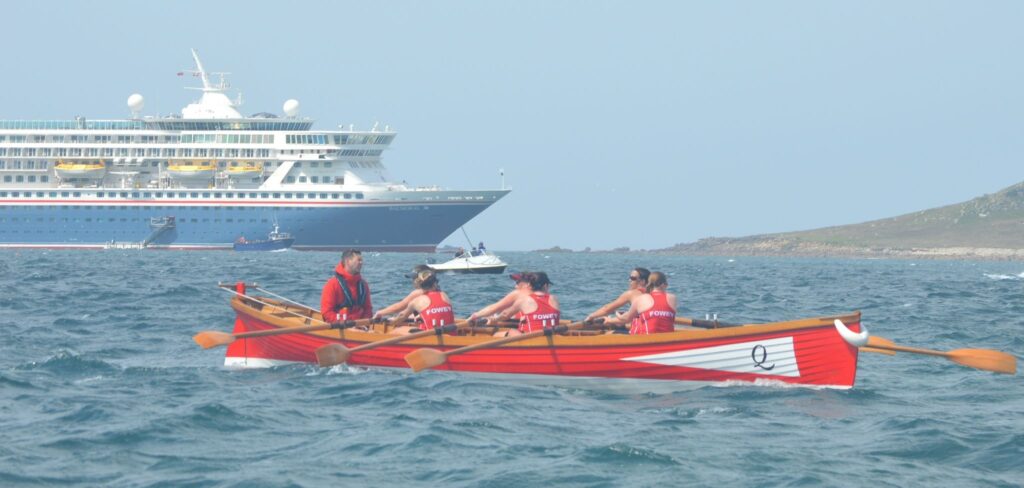
I am also very grateful for the support I have received for my personal hobbies. I am a gig rower and, at times, this requires intensive training as well as time to attend events, such as the World Pilot Gig Championships. The Cornwall Mining Consultants team have all got behind me, showed their support and enabled me to balance my work with my sport which has been brilliant.


What do you find most rewarding and why?
We work in a close-knit open office so it’s really rewarding to see the complete cycle of work. From the searches we undertake through to site investigations and then remediation work if needed. It’s incredibly satisfying following a job from start to finish with the whole office getting involved.
I have also thoroughly enjoyed the organised fieldtrips because it enables me to see how our records physically correlate to in real life, the Droskyn Perranporth trip was a particular highlight.
What are the next steps for you and do you have any aspirations for the next six months?
I am keen to develop the skills I have learnt so far, enhancing my knowledge and deepening my understanding.
In time, I would like to go with the site team to find a feature which has been identified by one of my searches, I think that would be really rewarding. I would also like to expand to different reports, such as Phase I reports in the contamination department.