
We are fortunate at Cornwall Mining Consultants to have a fantastic team of staff, many have been with us for some time, whilst others, such as Dylan Greet, are slightly more recent additions who are fast becoming part of the furniture.
So we thought we would take the chance to unpick his time here in a little more detail and uncover just exactly what his role as Search Coordinator & Research Geologist entails….
Why did you want to work with Cornwall Mining Consultants?
Growing up near Perranporth and having an interest in geology, I’ve always been fascinated with Cornish mining. Following a stint with another local mining company I was a taken aback by the scale of mining across Cornwall, particularly in my home area, where I was stunned to discover mining next door! This was something I had been completely ignorant to and it brought home the extent of the mining legacy impact, even today. From this point on I was keen to work with Cornwall Mining Consultants because of their firm reputation of being the best in business within the south west. I knew I would spend my time surrounded by knowledgable professionals using innovative technology, and I was right – I have learned so much from this highly experienced team.
What has been your most challenging projects to date?
To date I have spent my time researching hundreds of complicated mining sites and systems, each of them varied and interesting. However, there are two that really stand out; Dolcoath and Wheal Vor Carleen area.
The study of Dolcoath took a good month to complete and required me to review several hundred documents and maps to provide a complete and comprehensive conclusion. I found this incredibly interesting, learning much from my time spent poring over a vast selection of records.
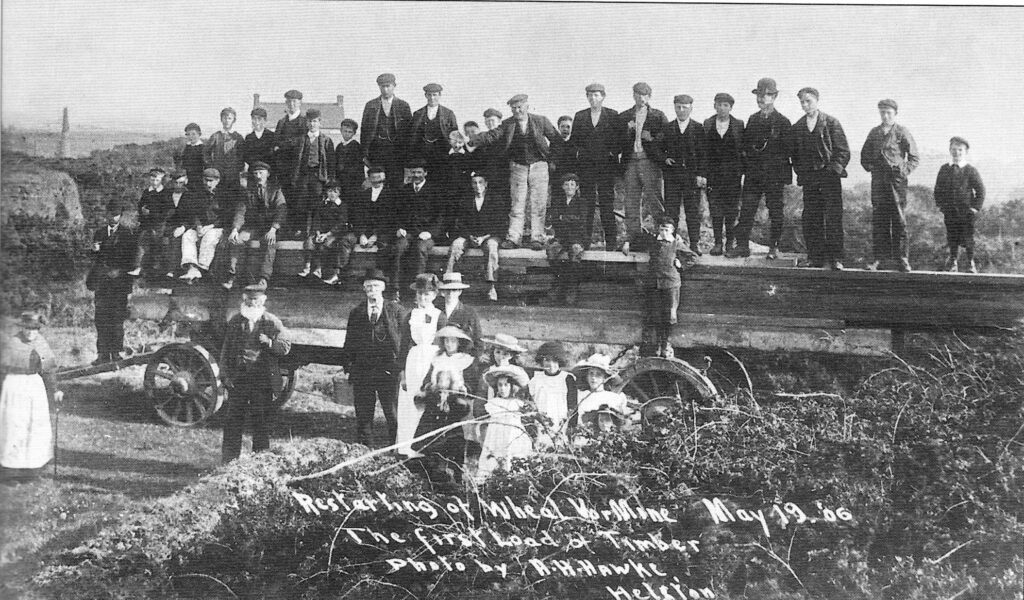
For Wheal Vor Carleen area, I was tasked with carrying out a complex review which was also deeply fascinating. Wheal Vor is an ancient mine which is likely to have been active at the time of the Romans! In fact, Roman coins have been found nearby and it is speculated that tin may have traded from the Breage area since the first century BC, which is just incredible. The lode at Wheal Vor was so hard and rich with tin that it regularly blunted the miner’s tools, this led to miners having to regularly climb up from the depths to visit the surface smithy for repairs. In the end, to improve the efficiency of the roughly 500 underground workers and keep the miners working hard, an underground smithy was built in 1841 at a depth of 440 metres below surface to repair these tools. Supposedly the furnace fumes, dust and heat didn’t cause any issues for the miners – one of the many mining anecdotes which I find fascinating.
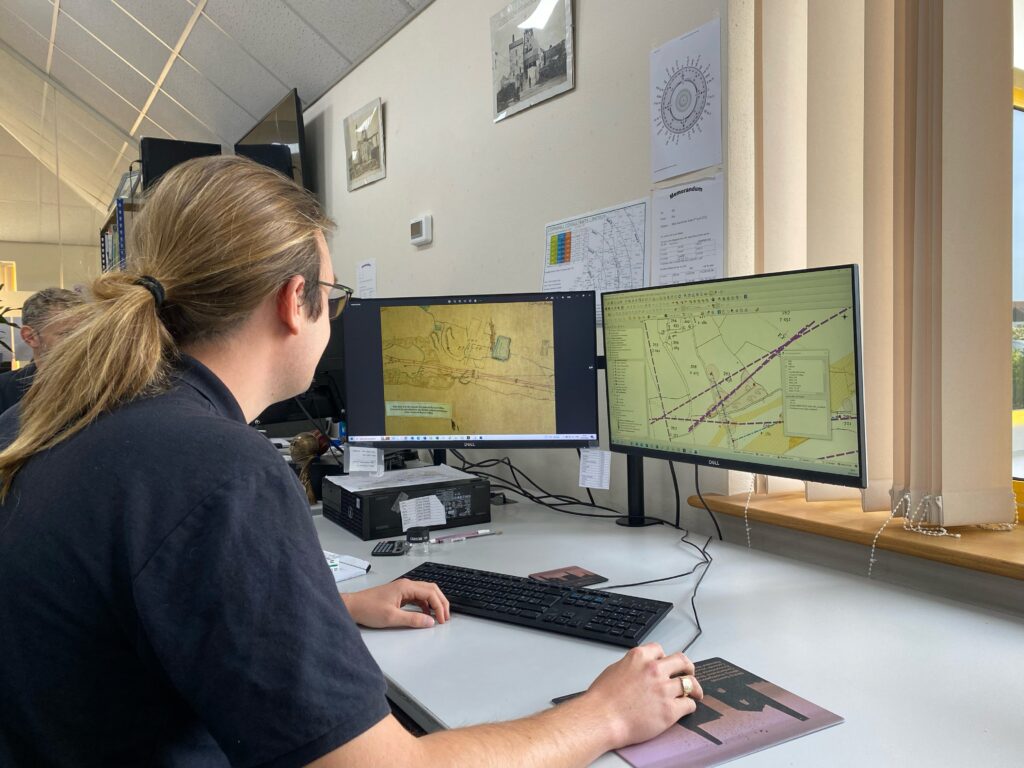
Although most of work is desk-based research, I have been involved with some challenging site work. A recent Walkover Inspection with our Geologist Matt Sharpe tested me in a different manner which put my Stamina to the test. We trekked an eight-acre site where we did about 400 metres of elevation throughout the day, almost the equivalent of climbing the coast to the top of Rough Tor. I was certainly pleased to get back to my desk that day!
What have you learned and how have you grown over the last year?
I’ve learned so much since I started here. The incredibly knowledgeable Jackie and Mark have educated me on Mundic, something I previously knew so little about. They have done such a good job that I am now able to assist some clients over the phone on the matter – thanks guys! We are also hugely privileged to have a genuine Cornish miner work with us, Chris Rogers. He previously worked at South Crofty, and thanks to him, I have learnt so much about mining first hand, the process and experience, both of which have helped me develop my understanding of Cornish mining.
What is the most enjoyable aspect of working at Cornwall Mining Consultants?
It might sound strange to some but my absolute favourite thing to do is a ‘complicated’ mine search, one which I can really get my teeth into! I recently undertook a Mining Subsidence Desk Study on a site near United Downs where I had the opportunity to look into the Ale and Cakes mine. I loved this and find the eighteenth-century older mines the most satisfying to investigate because the records are so limited. This provides the chance to ‘go deep’ with the research, looking at beautiful hand-drawn maps with mining features long forgotten. My favourite discovery since working here was finding a mine in St Agnes known as ‘Wheal Pasty’ – this makes a great anecdote and I’m still yet to find a more aptly Cornish-named mine.
What are the next steps for you and what do you hope to achieve in the coming year?
It’s going to be a big year for me, the department coordinator Roz Hibbert retired at the end of March so I’m starting a new role following in her very experienced footsteps. This coming year I hope to take the department to new heights whilst keeping things running smoothly, I’m also hoping to discover a new mine more Cornish than Wheal Pasty! If anyone out there knows of please let me know!!