
We are fortunate at Cornwall Consultants to have a fantastic team of staff, many have been with us for some time, whilst others, such as Matthew Sharpe, have recently completed their first year and are fast becoming part of the furniture. It is with this in mind that we thought we would take the chance to unpick his time here in a little more detail and uncover just exactly what he has been up to during his first 12 months….
Why did you want to work with Cornwall Mining Consultants?
I always knew that I wanted a career in Geology and on leaving secondary school, I went on to complete my MSc at Camborne School of Mines. By the time I had achieved this, I knew with sureity that I wanted a career within the mining sector and I saw working for Cornwall Mining Consultants as an application of knowledge obtained during my studies at BSc and MSc level in a real-life setting. Having no prior geotechnical experience before joining I relished the idea of being trained on the job and learning new skills in situ.
What has been your most challenging projects to date?
One of my most challenging jobs involved a client who wished to extend his house. This sounded simple enough however, due to the location, we recommended a mining investigation and it was a good job we did because we discovered two backfilled mine shafts!! The first was an inclined shaft beneath the footprint of his exposed extension trenches and the second was a sub-vertical shaft beneath the dwelling itself. The most challenging part of this job was attempting to delineate the inclined shaft which was made trickier as the mining in the area was very early and involved ‘pirate mining’ – in which the miners would work the ground after their ‘normal work day’ had finished. This meant that unrecorded workings, especially shafts and tunnels were prevalent in this area, often in a labyrinthine nature which are hard to delineate. In addition, it wasn’t always easy explaining these unusual features to the client and I took the necessary time to communicate at every step all whilst focusing on a positive solution. A good learning curve for me in many ways!!
What have you learned and how have you grown over the last year?
Working with Cornwall Mining Consultants has been fascinating and my knowledge of Cornish mining as a whole has greatly improved through looking at previous site investigation reports, photographs and having the opportunity to venture underground. It took me a while to intercept backfilled mining features, however I have since discovered many more and now have a greater knowledge on how to attempt to delineate and discover their sizes, orientations and locations. After finding mining features, I have developed a more practical approach to delineating through drawing cross-sections on site and working out inclinations and distances in order to gain more useful information on site. I now try to envisage all scenarios prior to drilling and put more time into drilling patterns to enable more accurate drawing of cross section.
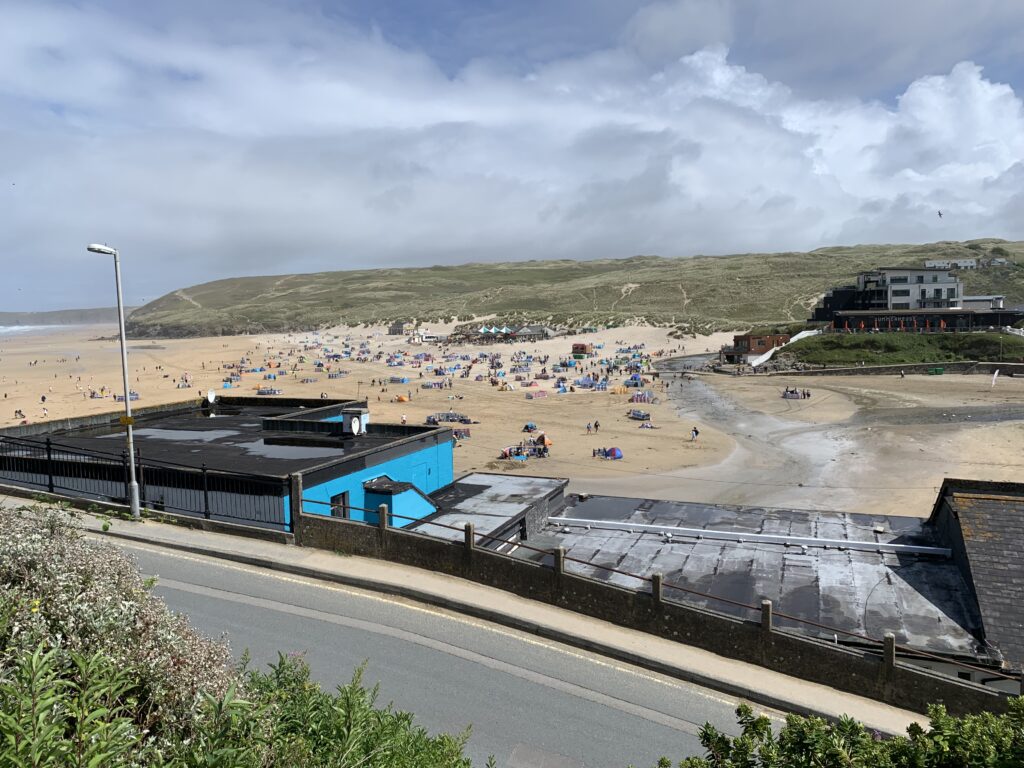
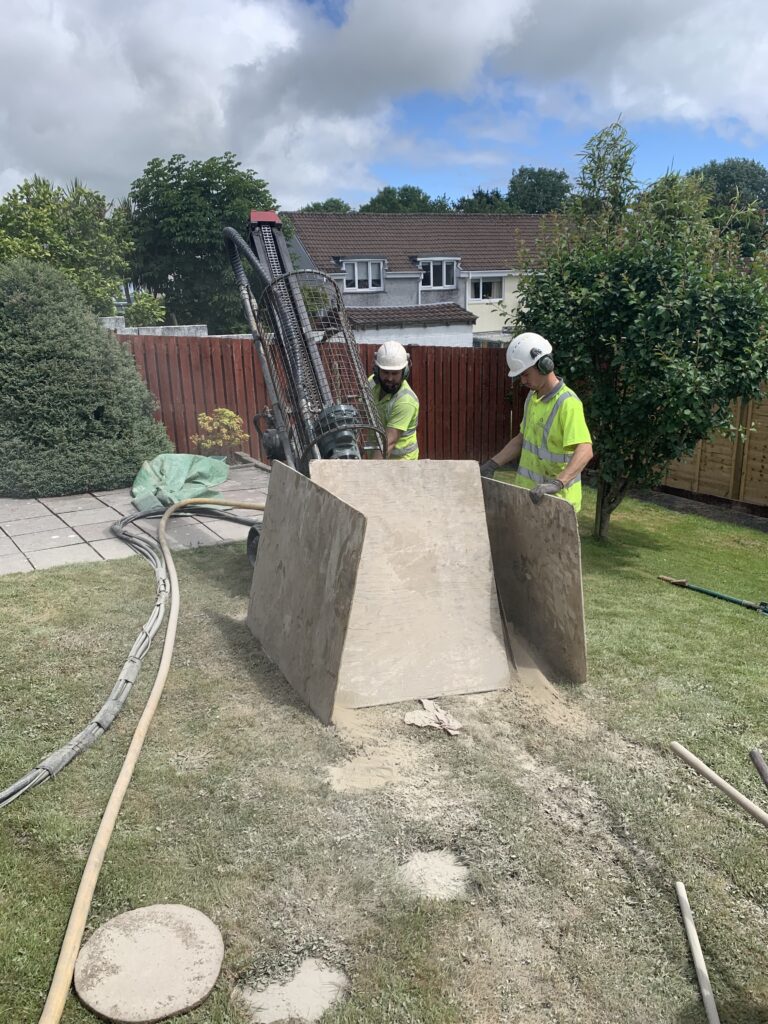
In addition, as I had no prior geotechnical experience, I found both the logging of window samples and understanding the process of window sampling a steep learning process. My first few jobs involved using a modular rig, which is especially useful for sites in which there are very steep or narrow entrances that a normal tracked rig would not be able to access. The modular rig is broken down into smaller parts which can be more easily manoeuvred and then rebuilt in the location you need to drill. Although it takes a lot of man-power to move the rig into position, the location of sites that have needed the modular rig are typically close to the sea, so the views are often lovely!!
What is the most enjoyable aspect of working at Cornwall Mining Consultants?
I really enjoy working with Cornwall Mining Consultants, the team are great with the work varied and interesting – no two days are the same. But perhaps the most enjoyable aspect of the job for me is the fast site-turnaround which enables me to journey around the far corners of Devon and Cornwall, uncovering places I didn’t realise were there. In addition to this, having the opportunity to explore underground mine workings has been fantastic and eye-opening as prior to this, I was working purely from photographs, written records and mine plans.
What are the next steps for you and what do you hope to achieve in the coming year?
My next steps are to undertake more site works in mining, land contamination and geotechnical departments, expanding my experience and knowledge and also to attend courses in contaminated land to broaden my knowledge to help writing factual reports.