
We were tasked with undertaking a Land Contamination study as this standard residential site in mid-Cornwall which consisted of a house with gardens to the front and back. The owners of the property were hoping to build an extension to the rear.
We began with a Phase I Land Contamination Desk Study where we identified some suspected mine waste on-site along with several mine lodes and potential mine workings underlying the site.
Surface mine waste deposits can be a significant source of heavy metals, such as Arsenic and Lead, which leach into the underlying soil. However, the underlying natural geology can also act as a significant source of these metals as the same mineralisation processes that enriched Cornwall in Tin and Copper, brought Arsenic along with them!
Based on the findings above, we recommended that a Phase II Intrusive Investigation take place. This would allow us to collect, and test, soil samples which would enable us to confirm if the potential contamination we had identified in our Phase I report, was indeed present and whether it posed a real risk to people or the environment.
Phase II Intrusive Investigation
For the Phase II Intrusive Investigation we dug three hand-excavated trial pits, focussing on the garden areas as these provide the greatest exposure to potential contamination, as well as to provide site coverage.
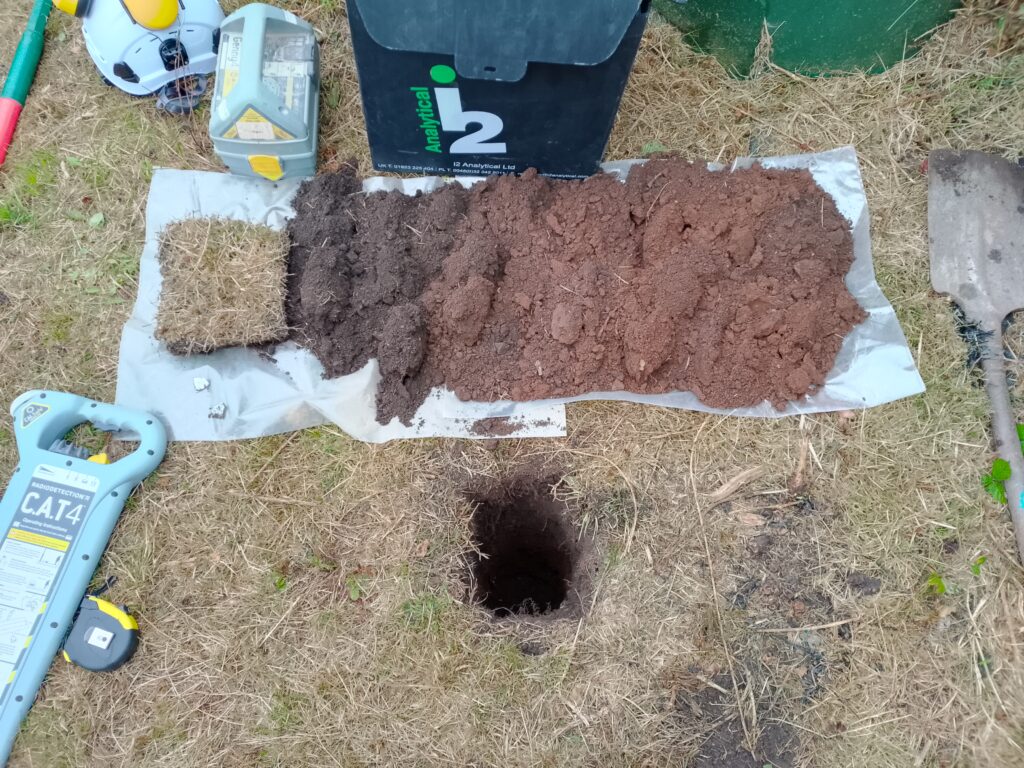
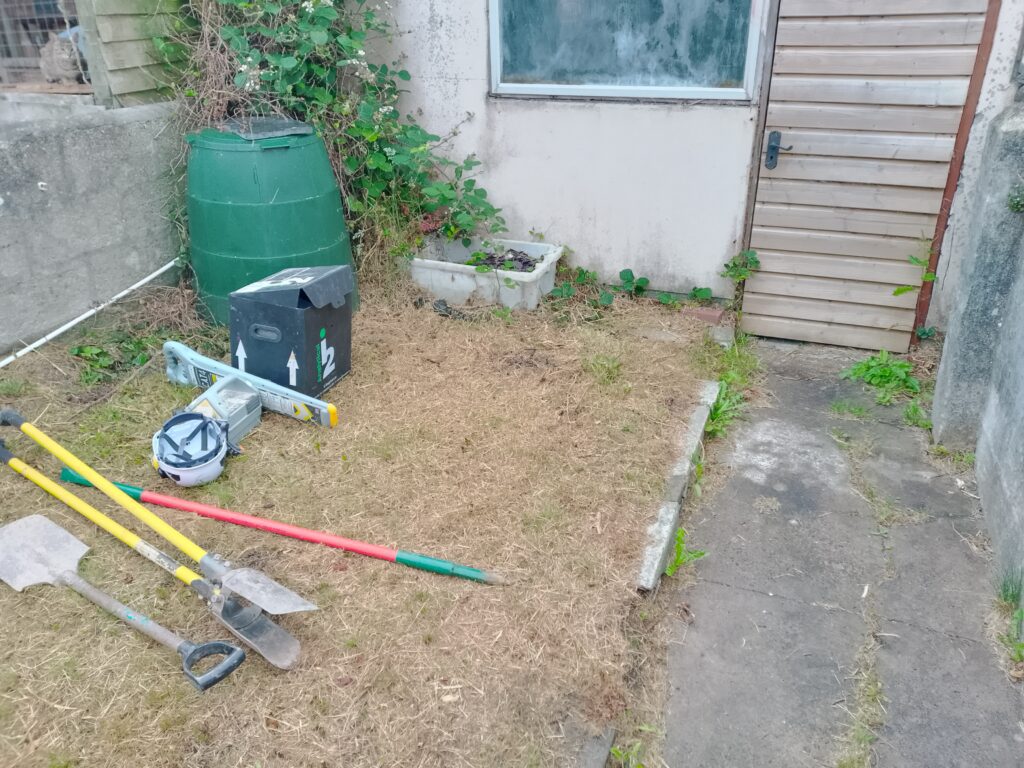
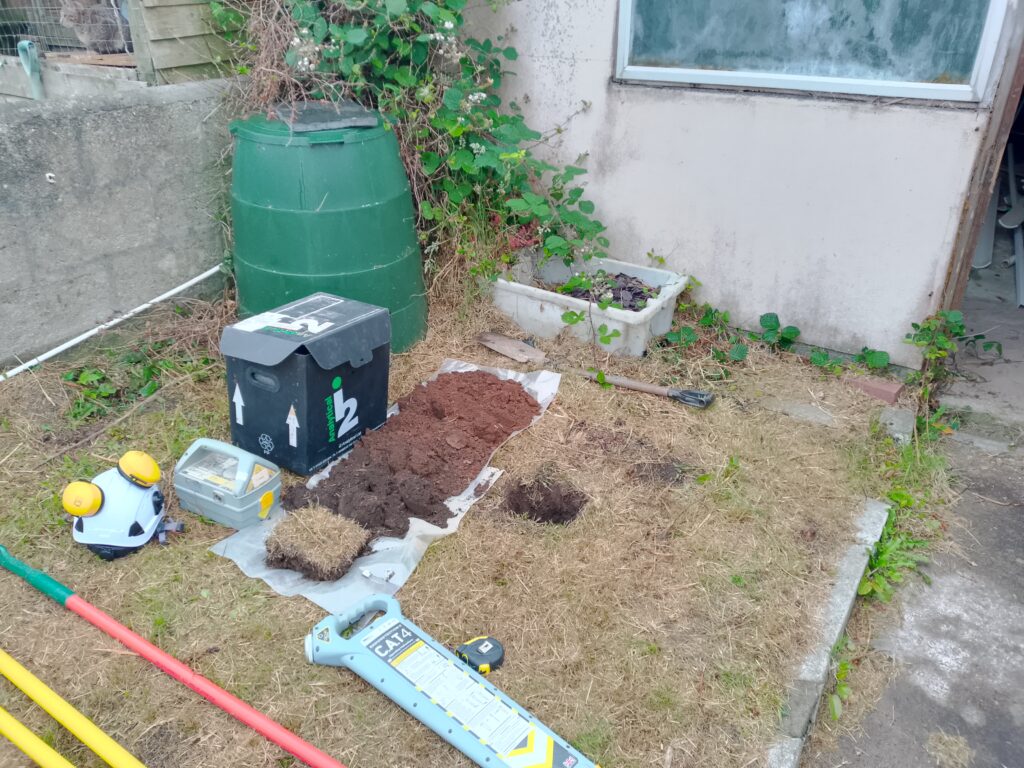
We commonly use hand pitting rather than machine excavation for small residential projects like this as it allows us to get to the site within a matter of days. In addition, it results in minimal disruption to the occupants, or their gardens!
As we had predicted, the suspected mine waste identified in the Phase I was encountered and it consisted of reworked natural materials including mineralised mudstone. Subsequent lab analysis of the collected samples revealed elevated concentrations of Arsenic and Lead across the site, which presented an unacceptable level of risk for a residential property, and required remediation. So we advised a Phase III Remediation Strategy as the next step.
Phase III Remediation Strategy
This provides the specification of the works required in order to make the site suitable for the proposed end use. It sets out how the land will be made suitable, whether through removal of the contamination source, covering/capping of contaminated soils, or other methods.
This comprehensive strategy is prepared in close collaboration with the client to create a remediation plan which is proportional to the proposed development, and still allows the client’s desired final surfacing to be achieved. In this instance, a clean cover system was considered the most appropriate, tailored to each area of the site as required.
The last stage of this project will be to undertake a Phase IV Verification Report however this can only be completed once the development is complete. So watch this space for final photos…